
Herbal Capsules & Botanicals
Reading Herbal Capsules for Strength and Vitality
Herbal capsules look different from multivitamins, and the labels are harder to compare. This page explains how botanicals such as ginkgo biloba and ginseng are positioned in men's vitality formulas, why blend labels hide more than they show, and what to check before buying a bottle in Indonesia's health-commerce channels.
A multivitamin lets you compare numbers. An herbal blend often hides them inside one figure — that gap is the whole reason this page exists.
Label disclosure, not ingredient suspicion
How herbal capsules differ from standard multivitamins
A multivitamin lists vitamins and minerals with amounts per serving. An herbal capsule lists plant extracts, often as a combined blend figure. Ginkgo biloba is used in many herb-based formulas and is commonly bundled with other botanicals rather than sold alone for men's vitality. Ginseng appears in the same kind of blends.
That bundling is the core difference: with a multivitamin you can compare numbers directly, and with an herbal blend you often can't. Not because the ingredients are dubious, but because the label format doesn't require the same disclosure.
Multivitamin label
Vitamins and minerals for men, each with its own amount
Per-serving figures you can line up against another bottle on the shelf.
Herbal blend label
Plant extracts, often one combined total
Five extracts may share a single weight with no split between them.

Why blend labels are hard to read
A typical herbal label might list five extracts under one "proprietary blend" total, with no breakdown. You know the total weight. You don't know whether ginkgo is 20 mg or 200 mg of it.
Some brands do list per-ingredient amounts, and those are the labels worth comparing. When a product won't tell you the amount of each extract, that's a signal about how much detail the manufacturer is willing to share. It isn't proof of a bad product, but it does make an informed choice harder.
What you see
One blend total
A single figure covers every extract named underneath it.
What you can't see
Each extract's share
Ginkgo and ginseng amounts stay unseparated from the rest.
What to look for
A per-extract list
The bottles that break the total down are the ones worth a second look.
What consumers usually expect from ginkgo

Ginkgo biloba is often associated with circulation-focused supplement messaging, and in men's formulas it usually appears alongside other botanicals rather than as the headline ingredient. That positioning tells you something: it's treated as a supporting component, not a standalone solution.
If a product's entire claim rests on one botanical, the rest of the formula is probably thin. If ginkgo sits inside a blend with ginseng and other extracts, the useful question becomes how the blend is dosed, not which single plant is named on the front.
The same logic applies to any natural capsules for strength and vitality you find in Indonesian marketplaces. A bottle that leads with one plant name on the front panel usually says very little about the other four extracts inside it — and the back panel is where the actual reading happens.
The nutrient gap herbal capsules don't fill
Herbal capsules and multivitamins do different jobs. If your diet is short on vitamin D3, magnesium, or B vitamins, an herbal blend won't close that gap. This is the most common mix-up we see: someone buys a vitality capsule expecting it to cover daily nutrition, then wonders why nothing changed.
- Daily nutrition
- Vitamin D3, magnesium, and B vitamins are the everyday shortfalls an herbal blend does not address. A daily supplement is the line item for those.
- Botanical extracts
- Ginkgo biloba, ginseng, and similar plant extracts are what an herbal capsule carries. A multivitamin does not deliver them, no matter how long the ingredient panel looks.
- Using both
- If you want both, treat them as two separate line items with two separate reasons. Stacking them without a reason is how routines get expensive and vague.
For the daily side of the routine, read our guide to Everyday Men's Multivitamins.
Format and routine
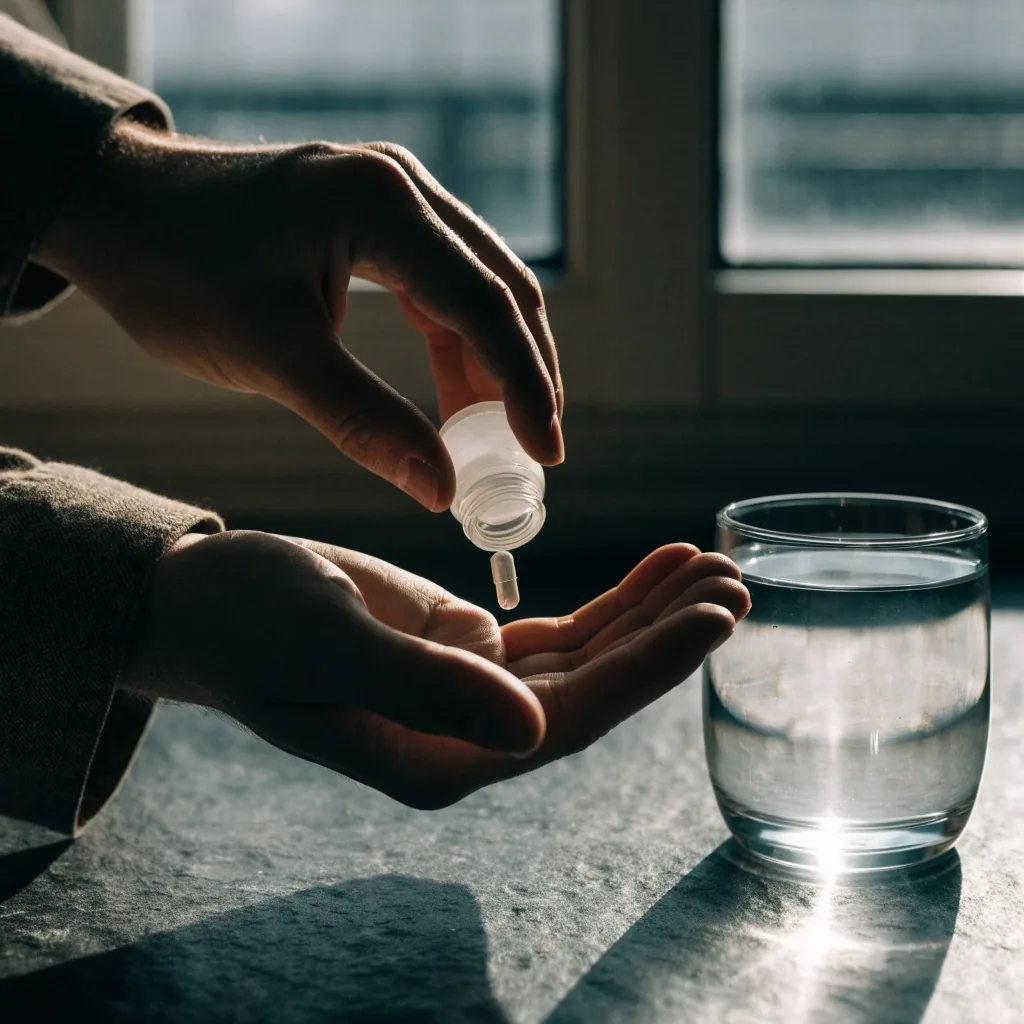
Herbal capsules are usually taken once or twice daily, and the serving size on the label tells you which. They're easy to travel with, which matters if you move between cities for work.
Unlike a powder, there's no mixing and no taste. The practical downside is that capsules encourage passive buying: you take them and forget them.
If you're adding a herbal product to your routine, decide in advance how long you'll try it and what you're tracking, even if that's just how consistently you take it. Vague intentions produce abandoned bottles.
How to compare two herbal products
Four checks, in the order that saves you the most time in a store or a marketplace listing.
-
First
Look for per-extract amounts
If both products disclose them, compare directly. If one does and one doesn't, you already have your answer about which is easier to evaluate.
-
Second
Check serving size
One capsule or two per serving changes the whole arithmetic of a bottle. Read it before the price.
-
Third
Count total servings per bottle
A 90-capsule bottle that serves 30 days is a different value from one that serves 90.
-
Fourth
Check for overlap
Look at anything else you already take, including your daily vitamins and minerals for men, so you know what you are doubling up on.
What this page won't claim
We won't tell you a herbal capsule will transform your vitality, because we haven't verified that for any product, and the phrase itself doesn't describe anything measurable. We won't invent a study or a certification.
What we can do is explain how the category is positioned and how to read a label properly, which is the part most buyers skip. If you're taking any prescribed product, check with a qualified professional before adding botanicals, since interactions are a genuine consideration.
Everything on this site is general information for adults in Indonesia who want to compare healthy lifestyle products on the shelf honestly. It is not a diagnosis and not a promise, and it will not replace advice from a qualified professional who knows your situation.
Questions readers send us
Three we get most often about botanical blends and label reading.

How do herbal capsules differ from standard multivitamins?
Herbal capsules center on plant extracts such as ginkgo biloba and ginseng, while multivitamins center on vitamins and minerals. Herbal blends often disclose only a combined extract total, which makes per-ingredient dose comparison harder than on a multivitamin label.
Can I take a herbal capsule instead of a multivitamin?
No. They cover different things. A herbal blend won't close a vitamin or mineral gap, and a multivitamin won't deliver botanical extracts. If you want both, treat them as separate items with separate reasons.
What should I check first on a herbal label?
Whether each extract has its own amount listed, or whether everything sits inside one blend total. Then check serving size and total servings per bottle so you can compare value across products.
Still unsure which bottle to pick up?
Send us the label you're looking at and we'll walk through what it discloses and what it leaves out. Or start with the wider comparison of herbal formats, multivitamins, and softgels in a typical routine.
Men's Vigor Balance · Jl. Jenderal Sudirman No. 52, Jakarta 12190, Indonesia · Monday to Friday, 9:00 AM – 6:00 PM (WIB)