
Informational resource — Jakarta, Indonesia
Natural Supplements for Men, Explained Clearly
Men's Vigor Balance is an informational resource about natural supplements for men: everyday vitamins and minerals, protein and omega-3 basics, and herbal capsules that show up in vitality formulas. We read labels, compare formats, and explain what each ingredient is normally included for.
Indonesia's supplement shelves have grown crowded. Imported men's formulas sit next to local herbal capsules, and the packaging often says more about marketing than about what's inside. Our job is to slow that down. Nothing here is a shop. You won't find a checkout button, and we don't tell you that any product will change your body. The goal is simpler: help you walk into a pharmacy in Jakarta, Surabaya, or Bandung and understand what you're holding.
How to use this site
- 1.Read the format first — tablet, softgel, powder, or two-capsule blend.
- 2.Check the per-serving amounts on the back, not the front of the box.
- 3.Fit the product into a normal week, not into a perfect routine.
We compare by format, nutrient profile, and how a product fits daily life. Side-by-side views live on our product comparisons page.
Where most men start: a daily multivitamin
A men's multivitamin is usually the first product people look at, and it's also the one with the widest quality range. Some formulas pack a long ingredient list into one tablet; others split nutrients across two or three capsules because certain minerals compete for absorption. Neither approach is automatically better.
What matters is whether the label states actual amounts per serving, not just a proprietary blend total. Naturelo One Daily Multivitamin for Men is a common reference point here because it's built as a one-a-day formula and gets discussed for nutrient balance rather than stimulation. Garden of Life Vitamin Code Men sits at the other end, positioning itself around whole-food sourcing in a capsule format. If you only read one label this month, read the multivitamin one.

One-a-day tablet or split capsules — both formats are sold widely in Indonesia. The label decides which one is worth buying.
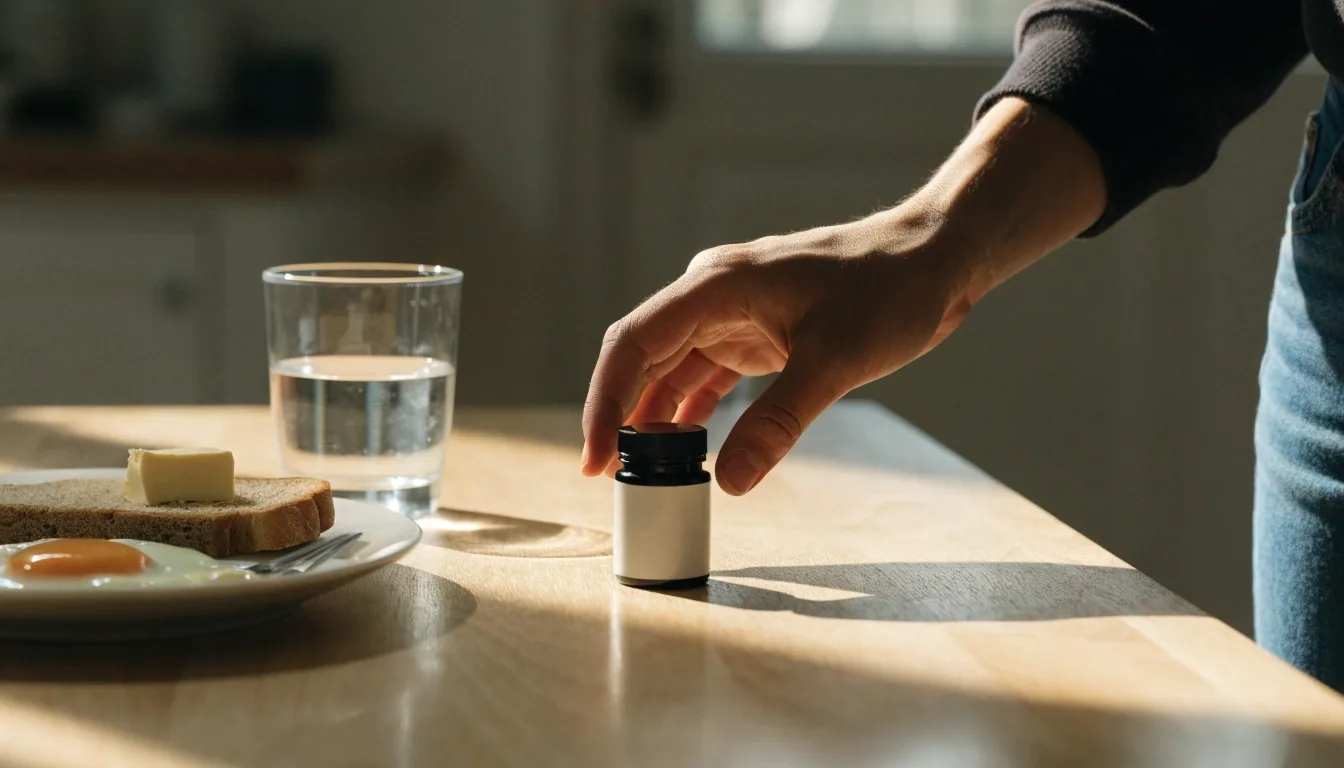
Vitamins and minerals for men: what the shortlist actually looks like
Most men's formulas revolve around a similar core. Thorne Men's Multi 50+ is often cited in premium coverage, and the brand's own article states it contains 1,000 IU of vitamin D3 and 30 mg of zinc bisglycinate. Those numbers matter more than the front of the box, because dosage clarity is what separates a serious formula from a filler-heavy one.
Vitamin D3
Appears in nearly every men's formula and is one of the nutrients that can lag for anyone working indoors in a city.
B-complex vitamins
Commonly tied to energy metabolism in supplement writing. Often already covered by a rice-based diet, so overlap is the thing to watch.
Magnesium
Often appears as a standalone rather than inside a blend. Nature Made Magnesium is a standard example of that single-mineral approach.
Zinc, selenium, iodine
Regular supporting minerals in men's vitamin supplements. Check whether the amount is listed per mineral or folded into a blend figure.
Whether you buy one combined product or two separate ones is mostly a routine question, not a health question. Read more on our everyday multivitamin page.
Energy metabolism in supplement writing means B vitamins, iron, and magnesium — not stimulants. Muscle and recovery conversations bring in protein and omega-3s.
Energy and endurance: protein, magnesium, omega-3

Optimum Nutrition Gold Standard Whey is a widely recognized whey protein powder, and it appears in men's supplement guides even though it isn't a vitamin at all. On the omega-3 side, Nordic Naturals Ultimate Omega is a well-known fish oil brand, while Kirkland Signature Fish Oil represents the value end of the same category. Both are sold as softgels.
What these products are not
Neither is a substitute for eating fish, and we won't pretend otherwise. Protein powder is a convenience format for hitting daily protein, not a replacement for meals.

Herbal capsules and botanicals: a different shelf
Herbal capsule products sit apart from standard multivitamins, and the labels read differently. Ginkgo biloba is used in many herb-based formulas and is commonly bundled with other botanicals rather than sold alone for men's vitality. Ginseng shows up in the same blends.
The catch is that blends often hide doses inside a combined figure, so you can't tell how much ginkgo is actually in the capsule. If a product won't tell you the amount per ingredient, that's information too. Our herbal capsules page walks through how to read a blend label without guessing.
Reading a blend label
- Per-ingredient amount listed? Then you can compare it with another product.
- Combined extract figure only? You cannot tell how much of any single botanical is inside.
- Serving size stated? Two capsules per serving is not the same as two capsules per day.
- Botanical or vitamin? They do different jobs and are not interchangeable.
How we compare products on this site
We compare by format first, then by nutrient profile, then by how the product fits a normal week. A one-a-day tablet, a softgel, a powder, and a two-capsule blend are not interchangeable, and pretending they are makes every comparison useless.
| Format | What to check first | Fits which routine |
|---|---|---|
| One-a-day tablet | Per-serving amounts for each nutrient; whether minerals are crammed into one press. | A fixed morning slot at home. Easiest habit to keep. |
| Split capsules | How many capsules make one serving, and whether that is once or twice a day. | People who already take two things daily and don't mind the count. |
| Softgel | Oil type and how many softgels equal one serving. Usually the fish oil shelf. | Anyone who prefers swallowing a soft capsule over a dry tablet. |
| Powder | Scoop size versus protein per scoop, and whether it needs a shaker. | Training days at home. Awkward to carry between islands. |
We also flag where a product's positioning is doing the work: whole-food branding, premium pricing, mass-market value. None of those labels tell you whether the formula suits you.
Common beginner mistakes
Most of these come up in the same conversation, and all four are avoidable with one look at the back of the label.
Stacking the same nutrients
A multivitamin plus a separate B-complex plus a zinc tablet can stack the same nutrients three times over.
Treating botanicals as vitamins
A herbal capsule is not a replacement for a daily vitamin. They do different jobs.
Judging by bottle size
A 120-capsule bottle that serves 30 days is not better than a 60-capsule bottle that serves 60. Capsule count is not dosage.
Copying a friend's routine
Buying based on someone else's meals, training, and sleep rather than your own. Supplements fill gaps. They don't create a diet.

Fitting supplements into a normal Indonesian week
Most people here eat rice at nearly every meal, which means B-vitamin intake is often reasonable while vitamin D and omega-3 intake can lag, especially for anyone working indoors in a city. That's a general pattern, not a personal reading, and it's the kind of thing worth discussing with a qualified professional rather than self-diagnosing.
Practical routine beats intensity: one daily supplement taken at the same time each morning is easier to sustain than four products taken whenever you remember. If you travel between islands for work, a one-a-day format is easier to carry than a powder. Format is a lifestyle decision as much as a nutritional one.
What to bring to the conversation
- The labels of anything you already take, so overlap can be spotted.
- How many meals a week include fish, eggs, or leafy greens.
- Your usual sleep and training pattern, since both shape what is worth adding.
- A budget range, because format and price move together.
What this site does not do
We don't sell supplements, and we don't accept payment to rank a product higher. We don't claim any supplement cures, prevents, or treats anything. We don't publish dramatic before-and-after stories, because we haven't verified any. And we don't tell you that a product is the best, because "best" depends on your meals, your budget, and your routine.
What we do is explain ingredients, formats, and label reading in plain English so you can make your own call. That's the whole editorial model, and it's why the site exists. Products mentioned on these pages are described as dietary supplements, not as anything that replaces advice from a qualified professional.
See our editorial approachQuestions we get from first-time readers
What vitamins do men actually need every day?+
There's no single list, because needs depend on diet and lifestyle. The nutrients most commonly covered in men's formulas are vitamin D3, B-complex vitamins, magnesium, and zinc. A daily multivitamin is one way to cover several at once; buying them separately is another. Which fits you is a routine and budget question more than a nutritional one.
Is a multivitamin better than buying single vitamins separately?+
Not automatically. A combined formula is more convenient, but some minerals compete for absorption when packed into one tablet, which is why certain products split servings across capsules. Single-mineral products like a standalone magnesium give you clearer dosing. Many people use a multivitamin as a base and add one or two single nutrients if a professional suggests it.
How do herbal capsules differ from standard multivitamins?+
Herbal capsules center on botanicals such as ginkgo biloba or ginseng, while multivitamins center on vitamins and minerals. The labeling differs too: herbal blends often list a combined extract figure instead of per-ingredient amounts, which makes dose comparison harder. They aren't substitutes for each other.
What should be checked on a label before choosing a men's supplement?+
Look for the amount per serving rather than per container, the serving size itself, and whether each ingredient is listed individually or hidden inside a blend total. Check the format, since softgels, tablets, and powders suit different routines. And check who the formula is aimed at, because a product marketed for men over 50 is built differently from a general one.
Are imported men's vitamin brands common in Indonesia?+
Yes. Imported men's formulas and herbal capsule products are widely sold through major health-commerce channels alongside local brands. Imported doesn't automatically mean better or worse; the same label-reading rules apply. Availability and price vary, so comparing formats and per-serving amounts is more useful than comparing countries of origin.

Where to go next
Start with the shelf you're actually standing in front of. If you're choosing a daily formula, the multivitamin guide is the shortest path. If you're comparing energy, recovery, or herbal products, those pages walk through the same label logic in more detail. Corrections and questions are welcome — we'd rather fix a page than leave a vague answer standing.