
Energy and endurance support
How Nutrition Supports Energy and Endurance in Active Men
Energy and endurance supplement writing tends to drift into stimulant territory. This page stays out of it. What we cover is how everyday nutrition, protein, magnesium, and omega-3 choices get discussed in relation to energy metabolism and workout recovery, and where the honest limits of that discussion sit.
Energy metabolism is a nutrition topic, not a stimulant topic
A daily supplement that covers B vitamins and magnesium is doing something quieter and more sustainable than a product promising immediate energy.
The phrase energy metabolism describes how your body converts food into usable energy, and B-complex vitamins and magnesium are the nutrients most often discussed in that context. Iron matters too, though it is not something to supplement casually. None of these produce a rush. They support normal processes that already run when you eat well.
That distinction matters when you are reading a label in a Jakarta shop. A product promising a lift within twenty minutes is usually selling caffeine, and caffeine is a separate conversation with its own tradeoffs. Vitamins and minerals for men belong to the slower category: they cover the nutrients your body uses to turn meals into fuel, and they work in the background of a week rather than the first hour of a workout.
B-complex vitamins
Discussed in energy metabolism coverage; included in most men's vitamin supplements.
Magnesium
Appears in muscle function and recovery writing; available as a standalone mineral.
Iron
Relevant to energy conversations, but not something to add without checking first.
What matters is that each item on your counter has a job you can name. If you cannot say what a product is doing in your week, it probably is not doing much.
Protein and muscle function
Protein powders are widely discussed as support for muscle repair, and Optimum Nutrition Gold Standard Whey is one of the most recognized whey products in that category. It appears in men's supplement guides even though it is not a vitamin, because it addresses a different job: giving your muscles the raw material to recover.
Whole food does the same thing. If you already eat enough eggs, fish, chicken, tempeh, or tofu across the day, a powder is convenience rather than necessity. If your meals are inconsistent, a shake is an easy way to close the gap. Total daily protein is the number worth watching; the timing of a single shake matters far less than most packaging suggests.

Magnesium and recovery
Magnesium comes up in men's coverage alongside muscle function and relaxation, and it is one of the few minerals with a clear standalone format. Nature Made Magnesium is a standard example: a single mineral, not a blend, which makes dosing straightforward.
-
Check for doubling up
If you train hard, compare magnesium against whatever multivitamin you already take. If the multivitamin carries a meaningful amount, adding a standalone mineral repeats the same nutrient twice in one day.
-
Timing is preference
Some people take magnesium in the evening because it is associated with relaxation, but that is routine preference rather than a rule. What matters more is taking it consistently and knowing what else already covers it.
-
Why single-mineral formats exist
A blend hides how much of each mineral you get. A standalone capsule lets you adjust one number at a time, which is easier to reason about across a training week.
-
Where it fits the week
Magnesium sits in the same daily routine slot as your multivitamin. It is not a pre-session product, and it is not something you rotate in and out around individual workouts.
Omega-3s and the softgel shelf
Omega-3 supplements are usually discussed for heart and cognitive support, and they remain part of men's routines even when the main focus is vitamins. Nordic Naturals Ultimate Omega is a well-known fish oil brand, while Kirkland Signature Fish Oil represents the value end of the same category.
Both are sold as softgels, and both are separate from a multivitamin. If you take a daily vitamin and an omega-3, that is two capsules, not a conflict. Eating fish two or three times a week is the food version of the same habit, and in Indonesia that is often the easier route.
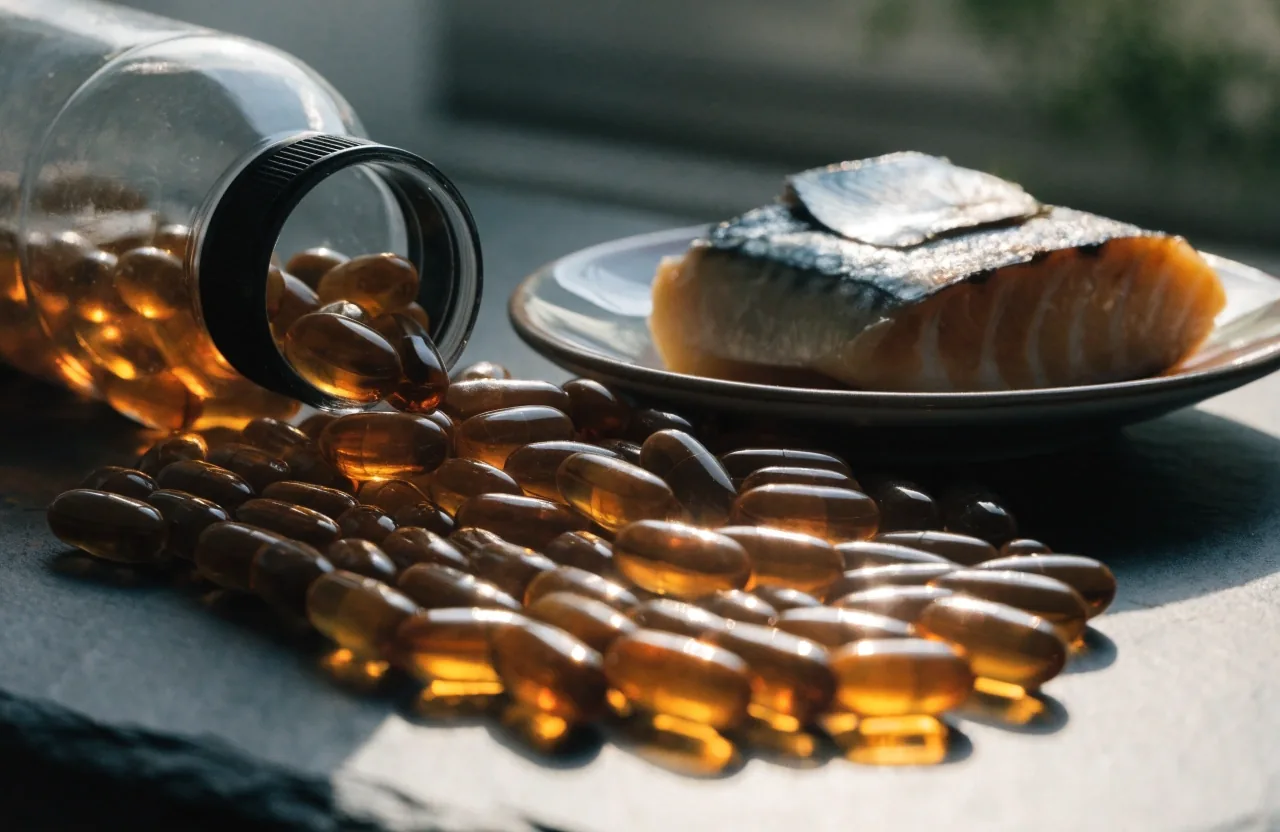
Two capsules, not a conflict
A daily vitamin and an omega-3 softgel sit in the same routine without competing. Read both labels once so you know what each one is covering.
Food version of the same habit
Fish two or three times a week covers the same intent. Softgels are the format that fits when your week does not line up with the market.
What a realistic stack looks like
A daily multivitamin, an omega-3 softgel, and a protein source that fits your meals. That covers most of what this page discusses without turning your kitchen counter into a shelf.
-
Daily multivitamin
One capsule covering the B vitamins and minerals that come up in energy metabolism coverage. Men's vitamin supplements in this format are designed to be taken the same way every day.
-
Omega-3 softgel
A separate capsule for the heart and cognitive side of the routine. Keep it next to the multivitamin so you take both without thinking about it.
-
A protein source
Whole food first where your meals allow it; a shake where they do not. The job is hitting a daily protein target, not chasing a specific product.
Herbal capsules are a separate category and belong to a different conversation. What matters is that each item has a job you can name. Our comparisons page shows how formats differ across these categories, so you can check what you are actually buying before it joins the counter.

Recovery basics that no supplement replaces
Sleep, water, and total food intake do more for endurance than any capsule. In a hot, humid climate, hydration is easy to underestimate, especially during long outdoor sessions. Protein timing matters less than total daily protein. And rest days are not optional if you are training consistently.
Supplements work at the margins of these basics. They do not substitute for them, and any page telling you otherwise is selling something. We would rather state that plainly than dress it up.
Sleep
The single largest lever on how you recover between sessions.
Water
Easy to under-drink in humid heat, especially on long outdoor days.
Total food
Daily intake and daily protein matter more than the clock.
When to ask a professional
If you are training for a specific event, managing a heavy physical job, or noticing that your recovery has changed without an obvious reason, that is a conversation for a qualified professional rather than a supplement aisle.
The same applies if you are already taking anything prescribed, since interactions are a real consideration. This page explains how ingredients are discussed in general terms. It cannot assess your individual situation, and we will not pretend a label can.
Ask the editorial team
Questions about how a nutrient is covered here, or where a format fits a routine? Write to us during working hours, Monday to Friday, 9:00 AM to 6:00 PM WIB.
Questions readers ask most
Which ingredients are most common in men's energy supplements?
In everyday nutrition products, B-complex vitamins and magnesium come up most often in energy metabolism discussions, with protein and omega-3s appearing in recovery conversations. Stimulant-heavy formulas are a separate category and a separate set of tradeoffs.
Do I need protein powder if I already eat well?
Not necessarily. Powder is a convenience format for hitting your daily protein target. If your meals already cover it, the powder adds little. If your meals are irregular, it is an easy way to close the gap.
Can I take magnesium and a multivitamin at the same time?
Check the multivitamin label for magnesium content first. If it already contains a meaningful amount, adding a standalone mineral doubles the same nutrient. Compare the numbers before combining.
These answers describe how ingredients are covered in general terms. They are not individual advice, and a supplement is not a substitute for a qualified professional's assessment.

Start with what you already eat, then fill the gap
Natural supplements for men work best as a small addition to a routine that already covers sleep, water, and meals. Read the comparisons next, or go straight to the multivitamin guide if daily coverage is the piece you are still sorting out.